
If China’s large factories are likened to towering trees, then its small Chinese factories are the undergrowth—providing nourishment to the giants while serving as the capillaries of the “Made in China” ecosystem. These small Chinese factories are vast in number, highly specialized, and irreplaceable. They play a crucial yet often overlooked role. In this article, I will explore the different types of small chinese factories, Pros and Cons of Small Chinese Factories and the conditions under which partnering with them makes sense, offering readers a genuine understanding of this sector.
Table of Contents
Types of Small Chinese Factories
Family-Run Workshops
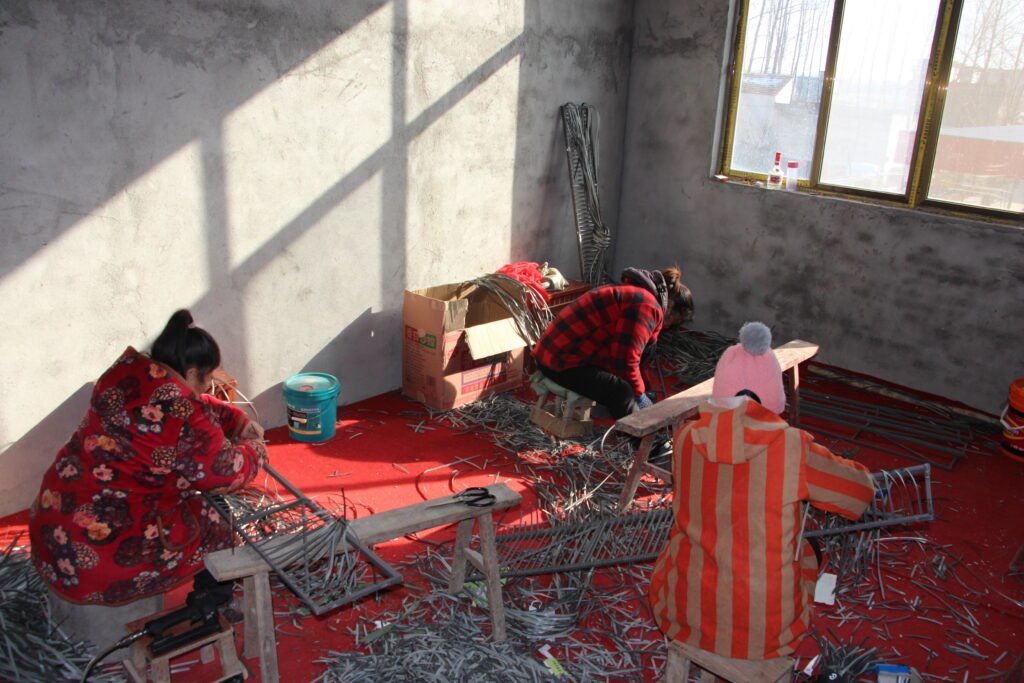
Our team once conducted a site visit to a rattan chair supplier in Wenzhou, Zhejiang, a business that had been operating for a decade. We discovered that raw materials were piled up in the courtyards of most households in the village, and villagers were actively crafting the chairs right at home. We learned that upon receiving orders from larger enterprises, the supplier would distribute raw materials to these households. Once the work was finished, the supplier would collect the finished chairs and transport them to a warehouse. The owner explained, “Factory premises and labor are our biggest costs; this model cuts expenses by at least 30%. At the same time, villagers can earn a living while caring for the elderly and children at home—it’s a win-win situation.” Many factories in China producing low-value-added daily goods adopt this family-based production method to save on costs.
Well-Organized Small Factories Focused on the Domestic Market
We partner with a garment factory in Guangzhou that has been in business for 12 years. With a workforce of over 40 employees, it boasts well-established production lines and a solid management structure. The quality of its garments is guaranteed—rivaling that of established brands—and it currently manufactures products for the “Luxiangnan” brand. However, lacking capabilities in online marketing or exporting, the factory is limited to supplying larger enterprises or acting as a contract manufacturer for established brands. In China, there are many small factories with years of industry experience, specialized technical expertise, and well-organized operations. They offer guaranteed product quality and competitive prices but lack online sales capabilities and the means to handle exports independently. Such factories are difficult to discover online; they are best identified and vetted through offline networks and on-site visits. China is home to tens of thousands of these “hidden gem” small factories with immense potential—which is precisely why professional China sourcing agents exist. A professional agent can help overseas clients locate and screen these high-quality small factories. If you need assistance, feel free to contact the MoodySourcing team!

Specialized Small Factories in Industrial Clusters
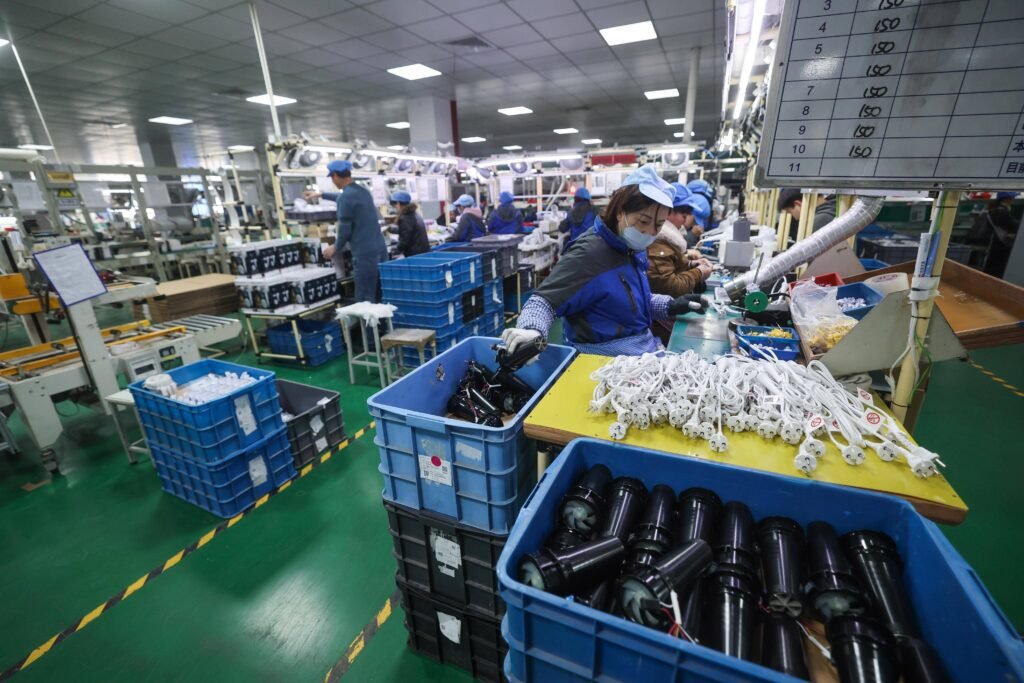
These small Chinese factories are concentrated in industrial clusters dedicated to specific products. Having focused on a single product category for decades, they possess deep technical expertise and often serve as “hidden champions” in their respective niches. Examples include clothes hanger manufacturers in Lipu (Guangxi), sock makers in Datang, Zhuji (Zhejiang), cutlery producers in Yangjiang (Guangdong), and toy manufacturers in Chenghai, Shantou. Although small in scale, they boast mature craftsmanship, comprehensive supply chain support, and excellent cost control within their fields. A “good supplier” is defined not only by production capacity but also by service attitude and capability—such as communication speed, willingness to cooperate, and problem-solving approach. If your product category aligns with their area of expertise, and you are looking for moderate order volumes, good value for money, and consistent quality, these factories are ideal partners. They are typically highly cooperative, willing to accept small-to-medium orders, and can even assist with custom product development.
Pros and Cons of Small Chinese Factories
First, small Chinese factories strengths lie in low minimum order quantities (MOQs), flexibility, and excellent service. Many of these factories have focused on a single product category for decades, honing specialized skills to become “hidden champions.” Furthermore, they treat small-to-medium-sized clients like royalty, offering full cooperation, whereas large factories—often overwhelmed with orders—may neglect the needs of smaller clients.
However, small Chinese factories also carry risks, primarily regarding a lack of standardization and stability. Their management tends to be informal, production processes may be somewhat disorganized, quality control can be lax, and production quality may rely too heavily on the experience of a single veteran craftsman.
Therefore, you should exercise caution when choosing a small factory if you require extremely high consistency in quality control, are placing massive orders, or lack in-house inspection capabilities. Additionally, small Chinese factories are generally not recommended for products with complex technical requirements—such as laser die-cutting machines. In other scenarios, however, high-quality small factories can be a viable option. To mitigate potential risks when working with a small Chinese factory, consider partnering with a professional Chinese sourcing agency. They can facilitate communication and negotiations, help finalize product specifications, and act as your “eyes on the ground” to monitor production progress, oversee quality control, and assist with logistics. Moodsourcing is a professional Chinese sourcing agency that offers these services; feel free to contact us if needed!
When Is It Appropriate to Work with Small Chinese Factories?
You can determine whether to work with a small Chinese factory by using a process of elimination. It is best to avoid small factories if your project requires extremely consistent quality control or involves very large-scale orders. Similarly, if a product demands high technical specifications—such as the manufacturing of laser die-cutting machines—small factories are generally not the right choice. In most other scenarios, however, partnering with a small Chinese factory is a viable option.
Ideally, you should look for a reliable factory that is located within an established industrial cluster and has been in operation for many years. Being part of an industrial cluster typically means the factory has access to a rich supply of relevant resources, often resulting in more competitive pricing and superior technical capabilities. If a small factory has managed to stay in business for one or two decades, it has clearly stood the test of time; such businesses have proven their competence, and you can generally rely on their product quality and reputation. Furthermore, ensure that the factory offers smooth communication—feeling confident in their reliability, professionalism, and service-oriented attitude is essential for a successful, long-term partnership.
Finally, keep in mind that working with small factories comes with inherent limitations. To mitigate potential risks, consider partnering with a professional Chinese sourcing agency. Such an agency can facilitate communication and negotiations, help finalize product specifications, and act as your “eyes on the ground” in China—monitoring production progress, overseeing quality control, and assisting with logistics. As a professional Chinese sourcing agency, Moodsourcing provides these services; please feel free to contect us if you need assistance!