
Anyone sourcing from China faces the same problem: Suppliers all claim to be factories—including sellers on Alibaba—but many are actually trading companies. How can you verify that a supplier is a genuine source factory? There are many online articles that teach how to “identify factories,” but in my view, many of them simply package a bunch of superficial characteristics—which can easily be faked—as reliable identification criteria. This article focuses on various methods—including online background checks, in-depth questioning during communication, and on-site visits—to help you comprehensively assess whether a Chinese supplier is a genuine source factory rather than a trading company. This article only covers how to verify Chinese suppliers are true factories, not trading companies. For a more in-depth understanding, please read the article Verifying a Factory’s Reliability.
Table of Contents
Popular Checks That Don’t Prove a Supplier Is a Factory
Verifying Registered Capital
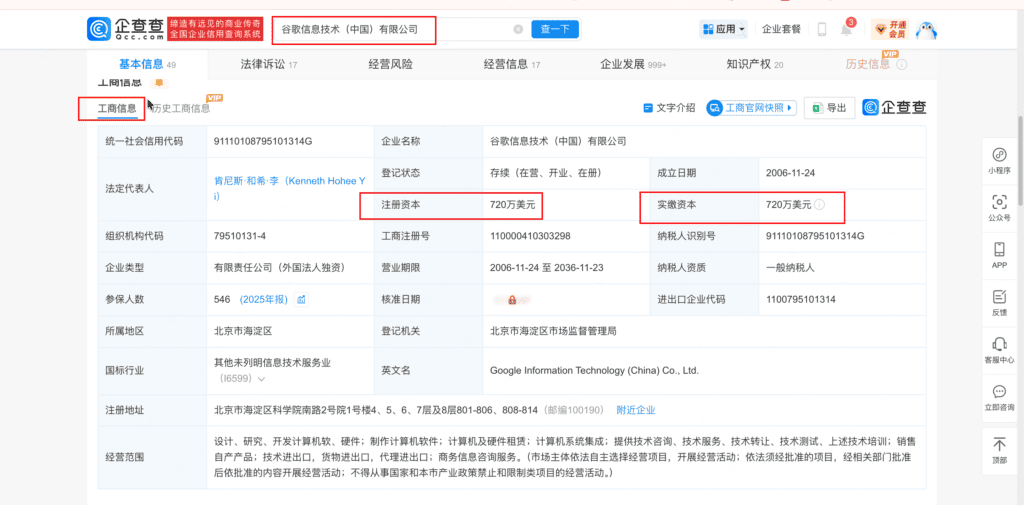
A common piece of advice is to look at the registered capital on the business license: the theory is that a high registered capital indicates a factory, while a low one indicates a trading company. This argument is completely baseless. Registered capital refers to the amount shareholders commit to paying within a specified timeframe; the funds do not actually need to be deposited at the time of registration. Essentially, it is merely a verbal promise—it reveals neither the company’s actual financial strength nor its business nature. “Paid-in capital,” on the other hand, represents the money actually deposited into the company’s account, but even this does not answer the question of whether the supplier is a factory. Furthermore, some suppliers may provide digitally altered business licenses, making them unreliable. To gauge a company’s true strength, it is better to check authoritative databases like “Qichacha” or “Tianyancha” for basic supplier information.
Requesting Samples and Checking Addresses
Another suggestion is to request a sample and then compare the supplier’s office address with the registered address on their business license; if they match, the supplier is considered a factory, and if not, a trading company. Requesting samples is a valid practice for verifying product quality, but do not use them to determine the supplier’s identity (i.e., whether they are a factory). In China, it is common and legal for a company’s registered address to differ from its actual operating address. Small and medium-sized factories often rent their facilities and relocate every two or three years, yet they frequently fail to update their registered address to match.
Check the VAT Invoice
Some blog posts claim that only factories issue VAT invoices, while trading companies make excuses to avoid doing so. This is incorrect. Chinese law only requires a company to engage in genuine sales transactions and complete tax registration to issue invoices; there is no requirement for the issuer to own a factory facility. Any company with “General Taxpayer” status can issue 13% special VAT invoices, making no distinction between factories and trading companies in this regard.
How to verify Chinese suppliers are true factories
Step 1: Online “Background Check”
First, it is important to evaluate information by cross-referencing various sources; you cannot determine if a supplier is an original factory based on a single piece of information. Effective online verification methods typically involve examining the following details:
Business Scope
A factory’s business scope usually includes terms like “production,” “processing,” or “manufacturing,” whereas a trading company’s scope typically does not. However, the reverse is not necessarily true: trading companies can include these terms during registration, so the presence of these words does not automatically confirm a supplier is a factory. Additionally, some suppliers provide digitally altered business licenses, so their authenticity must be verified. It is highly recommended to search for the company name on authoritative Chinese business information platforms like Qichacha or Tianyancha. These sites provide accurate data on the company’s establishment date, number of employees covered by social security, operating address, business scope, and record of changes. While checking the business scope cannot determine with 100% certainty whether a company is a factory, it can filter out 90% of trading companies—a very useful tip!

Minimum Order Quantity (MOQ)
Factories generally have higher MOQs than trading companies, though trading companies may intentionally set high MOQs to pose as factories. Therefore, this signal is useful in only one direction: suppliers willing to accept very small orders are usually not the actual manufacturing factories.
Product Catalog
Factories typically focus on producing a single type of product or a limited range of products. If a supplier sells a wide variety of items—such as stainless steel cups, glass cups, plastic cups, and mugs—there is a higher probability that they are a trading company. However, the reverse is not necessarily true; specialized trading companies can also focus on just one product category.
Check Factory Audit Reports
If a supplier claims to have supplied products to well-known brands, you can ask for their factory audit report. If they refuse or hesitate, they are likely a trading company. If they provide the report, verify the company name listed on it; if the name matches, they are indeed the actual manufacturer.
Review Online Information
Genuine factories usually have real photos or videos of their workshops, equipment, and production lines. If a supplier’s website or online store features only polished renderings and sells a hodgepodge of products—ranging from screws to clothing—they are most likely a trading company. Additionally, platform-verified designations such as “Source Factory” or “Verified Manufacturer” can serve as useful references.
Step 2: “Deep-Dive” Questioning During Communication
During phone calls or chats, asking specific professional questions can help determine if a supplier is a genuine factory at the source:
Request a real-time video tour: Directly ask to view the workshop, warehouse, or production line via video call. Genuine factories usually have no issue with this, whereas trading companies often make excuses to avoid it.
Probe for production details: Ask about material specifications, manufacturing processes, and whether core components are produced in-house or outsourced. You can also propose customization requests, such as packaging changes or color adjustments. A real factory will have a thorough understanding of its production workflow and be able to quickly provide professional advice and quotes based on technical expertise.
Step 3: On-Site Inspection
If you have a strong interest in a potential partnership, an on-site factory visit is the most prudent step. Key aspects to check include: ensuring the factory’s registered name (as shown on its signage) matches the entity you intend to contract with; verifying that raw materials, work-in-progress, and finished goods relevant to your products are present on the production floor; and asking detailed questions in person. An on-site visit allows you to quickly and effectively resolve any concerns while verifying the factory’s reliability.
If you are unable to travel to China, we can assist you in gaining a clearer picture of a supplier, helping you mitigate risks before making a purchase. As a professional China sourcing agent, MoodySourcing offers on-site factory inspection services, which include verifying a supplier’s actual operational status, assessing production equipment and capacity, evaluating quality control processes, and providing a comprehensive report on the factory visit.Please feel free to contact us if needed.