
Both ordinary consumers and importers are often puzzled when they encounter the label “Made in PRC.” You might find yourself asking questions such as: “What does ‘Made in PRC’ mean? Is ‘PRC’ the same as China?” or “Why has ‘Made in PRC’ replaced ‘Made in China’?” As an importer, you might also wonder: “Is ‘Made in PRC’ legal? Does the USA recognize the PRC?” Furthermore, you may need to know when to use the “Made in China” label versus the “Made in PRC” label, and what kind of issues might arise from a misunderstanding of these labels. In this article, I will clear up any confusion you may have, helping you truly understand the meaning and purpose of this label, addressing common misconceptions, and explaining its legal compliance.
Table of Contents
What does “Made in PRC” mean?
“PRC” stands for the People’s Republic of China. “Made in PRC” indicates that a product has undergone “substantial transformation” within the People’s Republic of China—specifically, mainland China excluding Hong Kong, Macau, and Taiwan. A “substantial transformation” refers to a manufacturing process that fundamentally alters the nature, function, or intended use of a product. For example, if components from various countries are imported into China and assembled into a finished laptop, the product’s country of origin is considered to be China.
“Made in P.R.C.” vs. “Made in China”: Which indicates better product quality?
To begin with, “PRC” is the abbreviation for the country’s official full name, while “China” is the common English name. In reality, “Made in PRC” and “Made in China” are identical—they carry the same legal meaning and refer to the same country of origin and production standards. There is no difference in the materials, quality, or manufacturing standards of a product based on which label is used. “Made in China” is simply more common on consumer goods and enjoys greater global recognition, having appeared widely since China’s “Reform and Opening-up” policy began in 1980. “Made in PRC,” by contrast, has only become more prevalent since 2020 and is not yet as widely recognized.
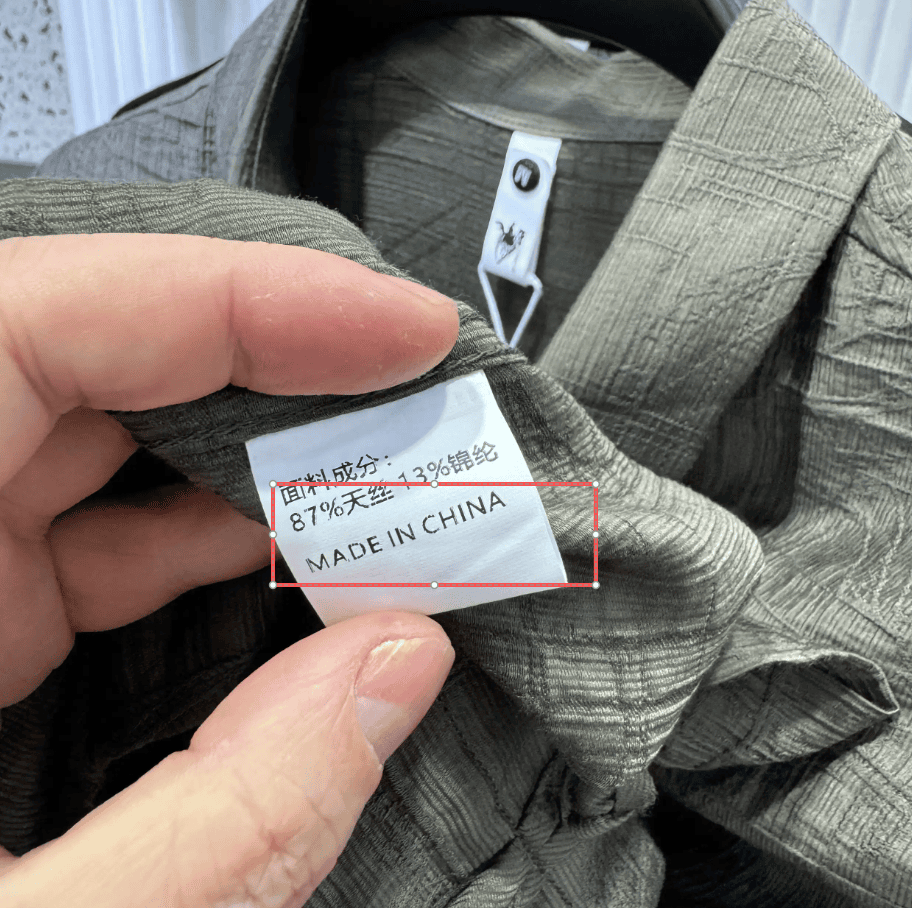
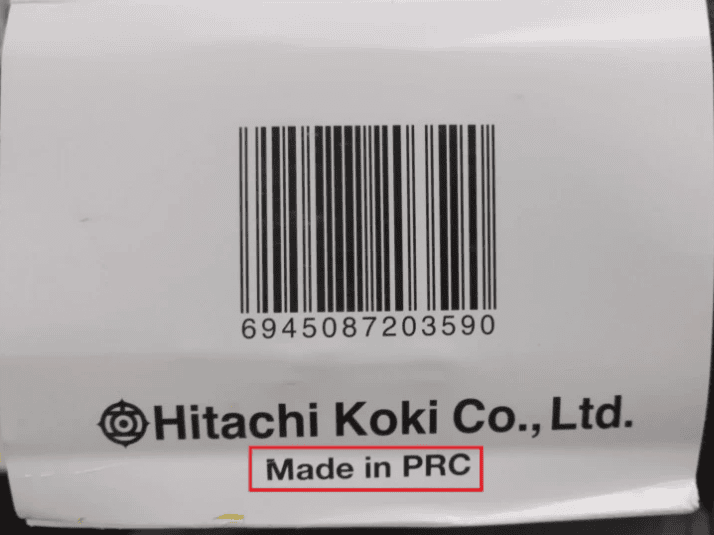
Why are more and more products labeled “Made in PRC”?
This trend can be analyzed from the perspectives of both Chinese suppliers and importers:
For Chinese suppliers:
- Mitigating market bias
For many years, some markets have associated “Made in China” with low prices, low-end goods, and poor quality—a perception that is now outdated. Some Chinese manufacturers choose to use the more neutral “Made in PRC” label to reduce the sensitivity surrounding the term “Made in China,” bypass existing market biases, and shift the focus toward the actual quality of the product.
- Enhancing brand image
Many Chinese suppliers have evolved from being mere exporters of goods to focusing on brand building and the promotion of their corporate culture. Adopting a different label can help shape a new, higher-quality international brand image. Furthermore, “PRC”—the abbreviation for the country’s full official name—is more formal and official than the common term “China.” Many Chinese suppliers opt for “Made in PRC” because it conveys a greater sense of professionalism.
For importers:
- A preference for a formal, official tone
“PRC” is the recognized international abbreviation for the country. It carries a more professional and rigorous tone—akin to an industry-standard designation—compared to the more colloquial “Made in China.” In fact, many industrial procurement clients in Europe, the Americas, and Latin America explicitly require “Made in PRC” labels in their purchase orders. Additionally, since the full official name—”People’s Republic of China”—is used on formal trade documentation (such as Pro Forma Invoices, contracts, and Certificates of Origin), importers often prefer to maintain consistent terminology across both product labels and trade paperwork to avoid any potential confusion or concerns.
- Mitigating geopolitical sentiment risks
In recent years, shifting public sentiment toward China in certain markets has led some importers to avoid prominent “China” labeling, which could invite unnecessary controversy. Using “Made in PRC” instead can help soften such stereotypes.
- Space efficiency and layout convenience
For small components or hardware, the space available for a nameplate is often extremely limited. “PRC” is shorter and consists of fewer characters than “CHINA.” Consequently, “Made in PRC” allows for a cleaner, more legible layout on small, cramped nameplates—a format frequently used for mechanical parts and hardware.
Is “Made in PRC” legal?
Regulations regarding country-of-origin labeling vary by destination. In most countries, both “Made in PRC” and “Made in China” are considered legally valid and are treated as equivalent. However, there are a few countries where the use of “Made in PRC” is discouraged. Before sourcing from China, it is advisable to research the specific local regulations—including whether a country-of-origin label is mandatory—and to select the most appropriate and secure labeling option. Countries where the use of “Made in PRC” is generally discouraged include:
- The United States
U.S. law is explicitly required that all imported goods must be marked with their final, true country of origin. U.S. Customs officials consider the term “PRC” to be ambiguous and insufficiently clear; therefore, only “Made in China” or “Made in P.R. China” are accepted.
- Middle East (e.g., Saudi Arabia)
In Saudi Arabia, SASO and customs regulations mandate that the country of origin be clearly marked on every individual product and its packaging. This marking must also match the country of origin declared in the SABER system. Customs authorities in Gulf Cooperation Council (GCC) countries enforce strict rules regarding country-of-origin labeling. Our logistics partners have specifically advised that for the Middle East market, it is best to use the explicit label “Made in China” rather than “PRC.”
- Vietnam
Vietnamese customs do not accept the label “Made in PRC.” They argue that “PRC” is not a commonly used English abbreviation in Vietnam and cannot be translated into the Vietnamese language; this could potentially confuse consumers and fails to meet Vietnamese regulatory requirements.
Frequently Asked Questions
Does the USA recognize the PRC? Can goods labeled “Made in PRC” be imported into the U.S.?
Answer: You cannot export goods to the U.S. using a “Made in PRC” label. U.S. Customs and Border Protection (CBP) regulations (19 CFR Part 134) require that the country-of-origin marking be easily identifiable by an ordinary end consumer. “PRC” is an abbreviation; if used alone, the marking will be deemed non-compliant, which could lead to the seizure of goods, the requirement to re-label items at the port, or the imposition of fines. Compliant labeling formats include “Made in China” or “Made in P.R. China” (the word “China” must be included).
Will using “Made in PRC” affect tariffs or anti-dumping duties?
Answer: No. Tariff rates and anti-dumping duties are determined by the product’s actual country of origin and its HS code, not by the text on the product label. Regardless of whether the label says “Made in China” or “Made in PRC,” if the product was manufactured in China, the applicable tax rates remain the same. You cannot circumvent tariffs or anti-dumping duties by simply changing the label.
If the Certificate of Origin (CO) or commercial invoice states “China,” but the product is marked “Made in PRC,” will customs object?
In the vast majority of countries, customs authorities will accept this and raise no objections—even if the documentation specifies “Country of Origin: China” while the physical product is labeled “Made in…” “PRC” essentially refers to the same country of origin. However, some countries and regions—such as the United States, nations in the Middle East, and Vietnam—do not recognize the “Made in PRC” label; in these cases, it is advisable to use the more widely accepted “Made in China.” Before importing products from China, please research local regulations and ensure the correct labeling is used to avoid potential risks.
Is “Made in PRC” acceptable for Mexico customs clearance?
Yes, Mexican customs fully accepts “Made in PRC,” and shipments can clear customs without issue. Mexico’s NOM (Norma Oficial Mexicana) regulations regarding country-of-origin labeling only require that the information be truthful and accurate; “PRC” is recognized as a standard abbreviation for the People’s Republic of China.
Does “PRC” include Taiwan or Hong Kong?
No. “PRC” refers to mainland China and does not include Taiwan, Hong Kong, or Macau.
If a product nameplate says “Made in PRC,” how should the country-of-origin field be filled out on the invoice, bill of lading, and packing list?
It is recommended to consistently use “CHINA” for the country-of-origin field across all documents. Please ensure that the information is uniform throughout the entire set of documents—do not mix “CHINA” and “PRC.”