Importing products from China can give businesses access to a wider range of suppliers and competitive purchasing prices. However, the process involves much more than finding a factory, confirming an order, and waiting for the goods to arrive. For overseas importers, the real challenges can arise at every stage of the sourcing process—from suppliers and products to shipping and customs. Is the information provided by the supplier accurate? Is the product quality reliable? Will the goods be dispatched on time? Will they arrive safely? And will they clear customs smoothly in the destination country?
A problem at any stage can lead to additional costs, delivery delays, or even difficulties clearing the goods through customs. This article outlines common problems when importing from China—categorized into four areas: suppliers, products, shipping, and customs—and provides strategies to prevent these problems when Importing from China.If you plan to import products from China, especially if this is your first time working with Chinese suppliers, understanding the common risks in these four areas can help you control sourcing costs and avoid unnecessary losses.
Table of Contents
1. Supplier Problems When Importing from China
When sourcing from China, importers may find suppliers through B2B platforms, search engines, trade shows, or business referrals. However, it is important to note that a company providing a product quote is not necessarily the factory that manufactures the item; it could be a trading company. This does not automatically mean that a trading company is unreliable. For certain products, trading companies may actually possess well-established supply chains and offer excellent service. The key is to clarify the entity’s actual role—whether it is a factory or a trading company—and to determine whether it has the capability to meet your order requirements.
1.1 Shell Companies
A shell company is a business that has a legal corporate registration but no genuine manufacturing capacity or substantive business operations. Some shell companies may purchase older registered companies to make themselves appear to be established suppliers. They may present business licenses, export licenses, factory videos, and other seemingly professional materials, while offering prices far below the market rate to persuade importers to pay. Once the deposit has been transferred, the shell company may disappear without a trace.
One of my clients, who was sourcing agricultural machinery, contacted a supplier and asked us to verify whether the company was legitimate. Our investigation revealed that the company had been flagged for abnormal business operations and had a history of customer lawsuits involving goods-related disputes. By conducting a background check, we helped the client avoid the potential risk of being scammed. This is why it is essential to verify a supplier’s reliability and conduct a background check before placing an order.
1.2 Unrealistically Low Prices and “Account-Building” Scams
Some “suppliers” exploit importers’ trust or desire to get a bargain. These scams generally take two forms:
1.2.1 Scams That Exploit the Desire for a Bargain
A price far below the market rate, followed by unexpected extra charges: A supplier may offer a price well below the market level to attract an order. After claiming that the goods have left the port, the supplier may suddenly say that the shipment has been held up because of “political unrest” or a “port strike” and that an urgent payment is needed to cover a fine—or the goods will be confiscated. Because the buyer has already invested money in the transaction, they may feel pressured to pay. In reality, the goods may never have left the port at all. Alternatively, the supplier may use a low price to win the order and then deliver poor-quality products. In short, either the goods are defective, or they do not exist at all.
1.2.2 Scams That Exploit Trust
The basic strategy is to build trust by fulfilling the first few orders, then take a large payment and disappear when the order value increases.
I once worked with a customer in Mexico who ordered a small container of disc mowers from a supplier twice at prices noticeably below the market rate. On both occasions, the supplier shipped the goods as agreed, and the customer received them in acceptable condition. When the customer placed a third order for a 40HQ container of disc mowers, however, the supplier asked for more favorable payment terms for itself: the importer had to pay 100% of the order value before shipment.
The importer paid in full as agreed, but the supplier repeatedly failed to ship the goods and eventually became unreachable. The customer then came to us for help. Our background check revealed that the supplier had been flagged for abnormal business operations. We are still helping the customer pursue legal action, and the money has not yet been recovered. This is a scam to watch out for. Once you are defrauded by an overseas supplier, recovering the money can be extremely difficult.
1.2.3 How to Avoid Supplier Scams When Sourcing from China
- To avoid low-price scams: Request quotations from several suppliers so you have a general understanding of the market price range. Be especially cautious when a quotation is significantly below the market benchmark. Analyze the costs, conduct a supplier background check, and, for large orders, consider an on-site factory inspection. Confirm that the supplier is genuine and reliable before formally placing the order.
- To avoid “account-building” scams: A supplier may initially offer unusually favorable terms, such as low prices, credit terms, or free samples. After fulfilling the first few orders and building trust, the supplier may suddenly stop delivering after the importer places and pays for a much larger order. Regardless of how long you have worked together, both importers and suppliers should follow the principle that either the goods or the money should remain in your control at each stage of the transaction. Do not casually relax your payment terms just because the supplier has become familiar. If a supplier asks to change the payment terms, proceed with caution.
2. Products Problems When Importing from China
2.1 Inconsistent Product Quality
Many importers ask to inspect a sample before approving mass production. However, even when the sample is satisfactory, the bulk order may differ from the approved sample, or quality may vary from one production batch to another. Differences may include materials, product dimensions, weight, key components, or packaging. Some defects may only become apparent during use, installation, or testing.
For this reason, quality control is particularly important during mass production, especially for products with demanding quality requirements or for large orders. The following measures can help reduce the risk of inconsistent product quality.
Document the requirements: Before mass production begins, turn the approved sample specifications into a clear written requirements document. Include detailed product information such as materials, dimensions, tolerances, functions, appearance, packaging, and any required testing. Send the document to the supplier and ask them to follow it strictly.
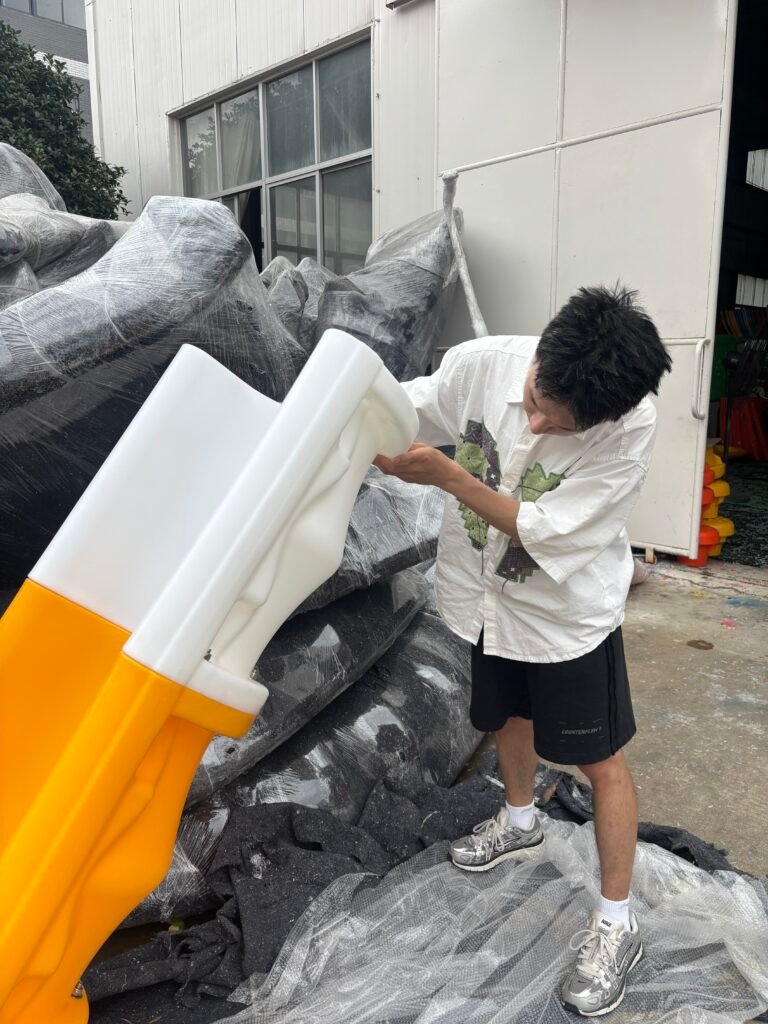
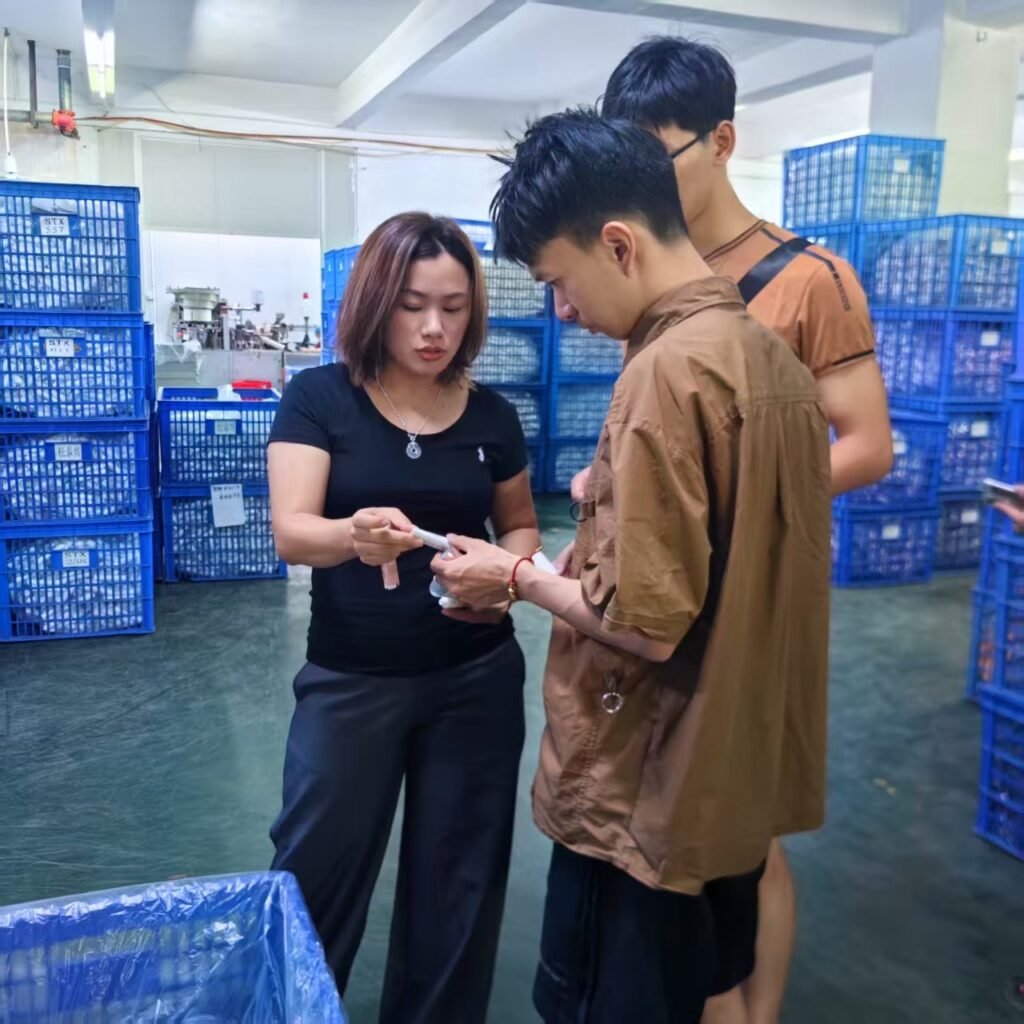
Conduct an in-process inspection: Once mass production is underway, visit the factory if possible to check production progress and confirm that the products are being made according to your requirements. If you cannot visit in person, you can hire a reliable local representative to inspect the production process on your behalf.
Inspect before shipment: After mass production is complete, inspect the goods yourself or, where necessary, hire a professional third-party inspection agency to assess whether the products meet the agreed requirements.
Of course, importers do not necessarily need to carry out every type of inspection themselves. You can hire a professional China sourcing agent to coordinate quality control. MoodySourcing also provides these services, so feel free to contact us if you need assistance.
2.2 Products That Do Not Meet the Destination Country’s Regulations or Technical Requirements
Different countries may have different requirements for the same product. For example, LED outdoor light trees may not require NOM certification to be sold in China, while an importer bringing the same products into Mexico may need NOM certification.
Determining whether a product requires certification—and which certification applies—depends on more than the destination country. It also depends on the product itself, its category, and the applicable regulations. If a product requires certification but does not have it, it may be impossible to import the goods smoothly into the destination country, and substantial fines may also apply.
Before importing a product from China, make sure you understand whether it must meet specific certification requirements. We also strongly recommend verifying the authenticity of any certification documents provided by the supplier to avoid potential risks.
2.3 Production Delays That Affect Sales or Project Delivery
Suppliers do not always meet their promised delivery dates. Delays may result from raw material shortages, changes to the production schedule, insufficient progress monitoring, or slow confirmation of customized products.
For importers, the core challenge is limited visibility into production when they are based overseas. By the time a problem becomes apparent, production may already be behind schedule. The following measures can help reduce the risk of production delays:
- Build a time buffer into the schedule: For example, if you need all the goods to be ready by September 30, tell the factory that the latest acceptable completion date is September 10. This leaves at least half a month as a buffer.
- Specify the delivery deadline in the contract: When signing the formal purchase contract with the supplier, clearly state the delivery date and specify how delays will be handled and what responsibilities each party will have.
- Follow up remotely on a regular basis: Ask the supplier to provide progress updates at agreed intervals, and proactively contact them to confirm the production status. If progress is slower than expected, follow up promptly and ask the supplier to take action to get the schedule back on track.
Placing an order does not mean the sourcing process is over. The process is not complete until you have received the goods, and every stage in between needs to be monitored for potential problems. Some buyers stop checking on production once an order has been placed, only to discover that the goods are delayed or have quality issues. If you do not have enough time to oversee production yourself, hiring a professional China sourcing agent can help you manage the process and reduce potential risks.If you are looking to replace an unreliable supplier, you can refer to the detailed guide: “How to Replace an Unreliable Chinese Supplier.”
3. Shipping Problems When Importing from China
3.1 Actual Shipping Costs Exceed the Budget
Many importers focus on the factory’s quotation but do not fully account for domestic transportation, international freight, insurance, and destination-port charges before purchasing. As a result, the product price may look competitive, while the final landed cost exceeds the budget and leaves little or no profit. In international trade, shipping costs can sometimes exceed the total value of the goods.If you would like to learn more about international trade terms, please refer to EXW vs FCA and FOB vs EXW.
Before confirming an order, obtain clear freight quotations from several freight forwarders and calculate the landed cost in advance. If the estimated landed cost leaves you with no profit—or a margin that is too small—the order may not be worthwhile, even if the product price looks attractive.
When requesting a freight quotation, check the following:
- Which mode of transport is quoted: sea freight, air freight, rail freight, or another option.
- Which transport legs and services are included.
- Whether pickup in China, loading, and export-related charges are included.
- Whether destination-port charges, customs-clearance service fees, and final delivery are included.
- The quotation’s validity period, estimated transit time, and any potential surcharges.
- Whether the chargeable weight, volume, and packaging dimensions of the goods have been confirmed.
Compare several freight forwarders and assess not only their prices, but also the scope of their quotations, transit times, communication efficiency, and ability to handle unexpected problems.
3.2 Shipping Delays
International transit times are not always fixed. Changes to vessel schedules, port congestion, weather, transshipment connections, inspections, and other uncontrollable factors can all affect arrival times. Taking preventive measures in advance is essential to reducing the risk of delays.
- Book cargo space in advance: Contact your freight forwarder while the goods are still in production and arrange space ahead of time. Waiting until the goods are ready to ship before booking can leave you without available space and cause delays. During peak export seasons in China, consider contacting the freight forwarder one or two months before the goods are ready.
- Allow for buffer time: When communicating the expected arrival date to your downstream customer, allow more time than the freight forwarder’s estimate. A buffer of at least one week is recommended.
3.3 Cargo Damage
Unsuitable packaging for long-distance transport, improper container loading, inadequate securing, or careless handling can all damage goods. For example, glass products may break in transit, heavy machinery may shift if it is not secured properly, and metal products may rust if moisture protection is inadequate.
To reduce the risk of cargo damage:
- Confirm that the packaging is suitable for sea freight, air freight, or multiple handling stages.
- For fragile goods, precision equipment, and oversized cargo, agree with the supplier on cushioning, securing, moisture-proofing, and rust-prevention requirements before placing the order.
- For high-value goods, assess the transport risks and consider purchasing cargo insurance.
- Ask the supplier to provide actual photos of the packaged goods to check that the packaging is correct. During container loading, ask the supplier to send photos promptly so you can verify that the goods are loaded correctly.
If you discover damage when the shipment arrives and you unpack the goods, take photos immediately and note on the delivery receipt that the packaging is damaged and that you reserve the right to claim compensation. Keep the damaged packaging materials and submit a claim promptly. Do not repair or resell the damaged goods without first addressing the claim.
4. Customs Problems when Importing from China
4.1 Incorrect Product Classification That Causes Duty or Declaration Problems
An HS code is a product’s “international identification number.” Importers need to determine the appropriate code based on the product’s actual characteristics, use, materials, functions, and the applicable customs classification rules.
Incorrect classification can lead to duty miscalculations, inconsistent declaration information, or additional scrutiny and compliance issues. Products that look similar may still fall under different HS codes if their functions, materials, or uses differ.
To reduce the risk of incorrect product classification:
- Do not simply copy the HS code provided by a supplier or another importer. Look it up and verify it independently on the HS Code website.
- Prepare a complete product description before shipment, including its materials, intended use, model, and technical specifications.
- For products whose classification is difficult to determine, consult a customs broker in the destination country or another suitably qualified professional.
- For high-value products, complex classifications, or goods subject to stricter controls, ask the customs authority in the destination country whether you can apply for a legally binding advance ruling or classification decision.
Also note that the number of digits in a product code, the applicable duty rates, and regulatory requirements depend on the destination country’s system. You should not assume that the destination country uses the same classification simply because a code has been provided by the exporter in China.
4.2 Inconsistent Shipping Documents That Delay Customs Clearance
Import customs clearance usually requires a commercial invoice, packing list, transport documents, and other paperwork required by the destination country. Depending on the product, additional documents may be needed, such as a certificate of origin, import license, test report, or certificate of conformity.
If the product description, quantity, weight, value, model, or other key details differ between documents, customs or other regulatory authorities may conduct further checks. At best, correcting the documents can lead to port storage charges; at worst, the discrepancies may be treated as false declarations, potentially resulting in fines or even criminal prosecution.
Carefully cross-check the commercial invoice, packing list, bill of lading, and any other applicable declaration documents to ensure that all key details are consistent. You should also confirm in advance whether the product category and destination-country rules require a certificate of origin, import license, product safety documents, test reports, or conformity assessment documents.
4.3 Products Subject to Special Controls That Were Not Checked Before Purchase
In addition to standard customs declaration requirements, some products may be subject to extra import permits, product certifications, brand authorization, quarantine, or other regulatory procedures. Examples include agricultural products, food-contact materials, chemicals, branded products, electrical appliances, machinery, and products with wireless communication functions.
If an importer discovers that required documents or approvals are missing only after production is complete—or after the goods have been shipped—the shipment may face additional testing, storage charges, re-export, or other handling costs. Before paying a deposit, confirm the import requirements with a customs broker in the destination country, the relevant regulatory authorities, or a professional compliance consultant to ensure that the goods can legally enter the destination market.
In addition, even when dealing with products from relatively unfamiliar brands, check the destination country’s customs system before placing an order to see whether the brand has already been registered or recorded. If it has, you may need to obtain brand authorization before importing the products; otherwise, customs clearance may be blocked.
5.Conclusion
For importers, sourcing products from China involves various potential risks and uncertainties, so reducing procurement risk is essential. For businesses importing from China for the first time, sourcing multiple types of products, or operating without a dedicated procurement team, coordinating suppliers, quality inspections, shipping, and export documentation can require considerable time and effort.
To save time and reduce potential risks, working with a professional and experienced China import agent can be a sensible choice. Depending on the agreed scope of service, a sourcing agent can help with:
- Supplier development and screening: Find potential suppliers that meet your product requirements and verify relevant company information.
- Quotation and purchasing coordination: Compare supplier quotations and help confirm product specifications, payment terms, and delivery arrangements.
- Quality control: Coordinate sample approval, production follow-up, inspections, and the handling of nonconformities.
- Logistics coordination: Help compare shipping options, confirm key delivery milestones, and communicate with freight forwarders.
- Export documentation coordination: Help organize and cross-check relevant export documents as agreed by the parties.