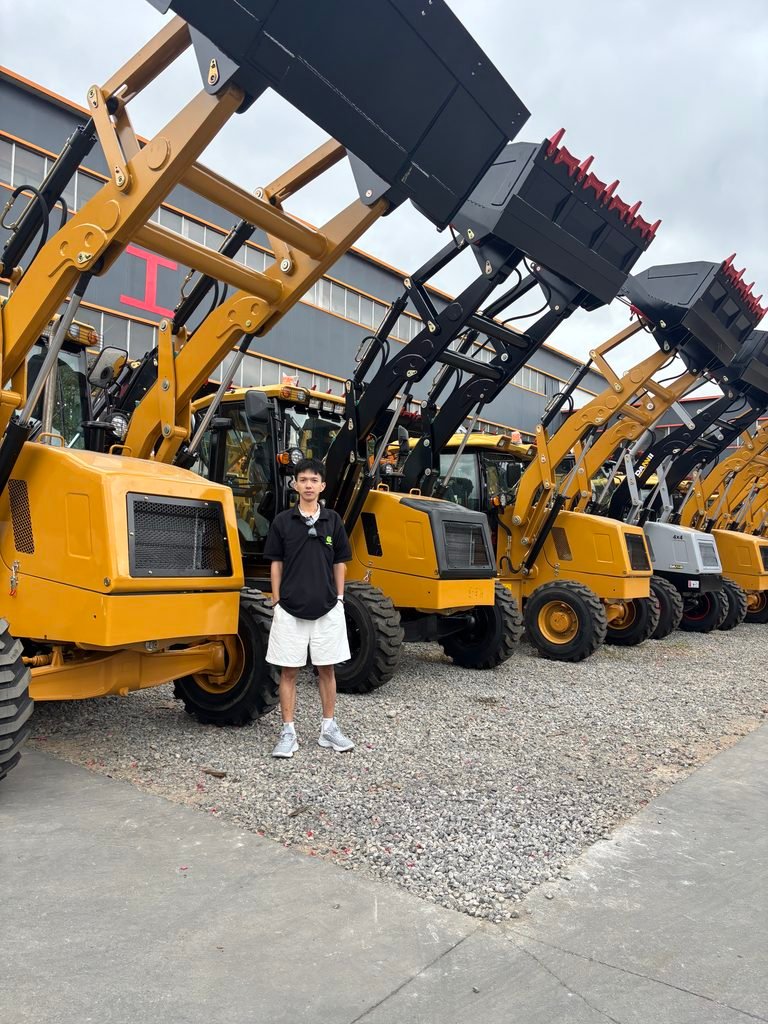
“Trackhoe” and “backhoe” come up all the time, and they are easy to mix up. A trackhoe is a type of excavator: a tracked excavator. A backhoe (short for backhoe loader) is a different machine: a loader with a front bucket and a digging arm mounted on the back. A trackhoe is built mainly for digging, with an upper structure that rotates 360° on a tracked undercarriage. A backhoe can both dig and load, and runs on wheels. In this guide, I’ll walk through the differences “Trackhoe vs Backhoe”, which jobs each one suits, and what you must check before buying either one from China.
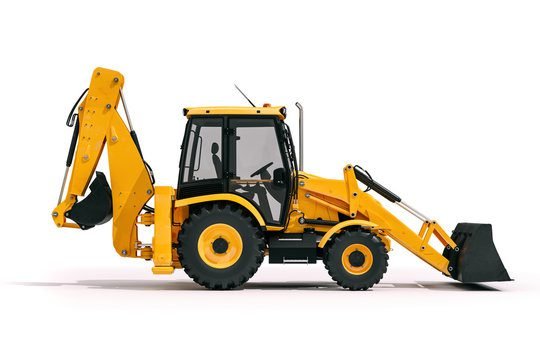
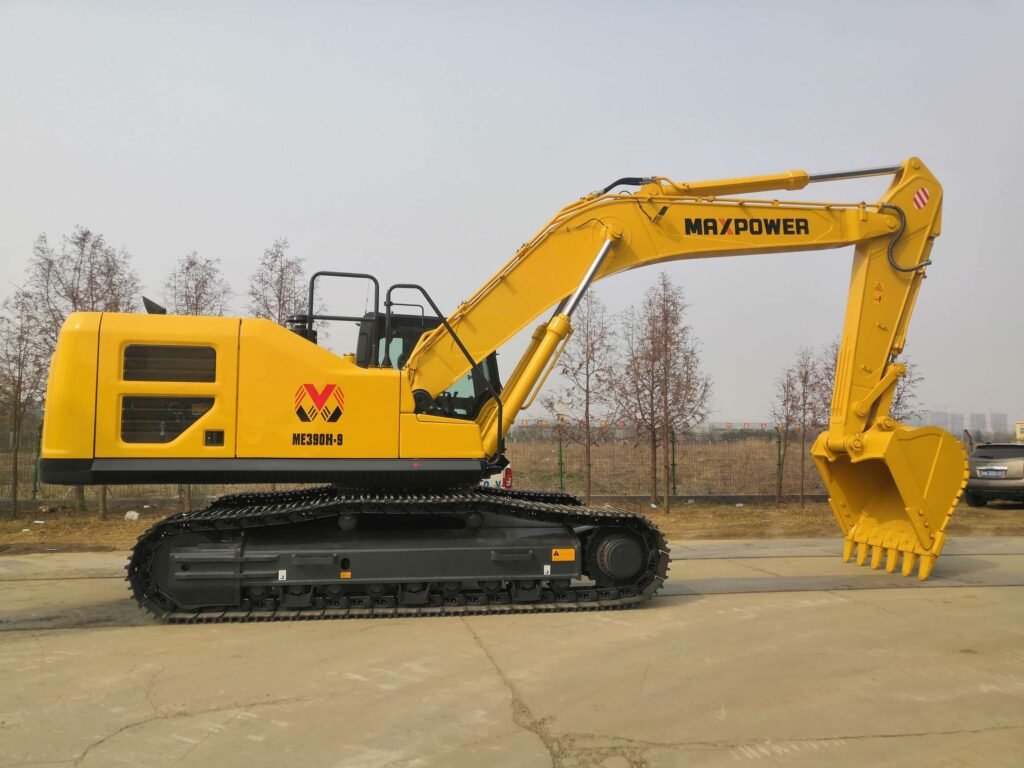
Table of Contents
What Is a Trackhoe?
“Trackhoe” is the common name for a tracked hydraulic excavator. Its key features are a crawler (tracked) undercarriage, a 360° rotating upper structure, hydraulic drive, and interchangeable attachments.
Pros: strong climbing ability, high stability with low tip-over risk, deep digging depth, and high efficiency in continuous digging.
Cons: slow travel speed, large size, high purchase price, high total fuel use because of its bigger engine, and it needs a trailer to move between job sites.
What Is a Backhoe ?
“Backhoe” is the everyday name for a loader with a digging arm mounted on the back. Its key features are a loader bucket in front, a digging arm in the rear, a wheeled chassis, a swivel operator seat, and interchangeable attachments.
Pros: one machine for many jobs, agile and mobile, and low maintenance costs.
Cons: limited digging depth, lower digging efficiency, small bucket capacity, no 360° rotation, and it can slip or get stuck on soft ground.
This “two-ended” design makes the backhoe especially common on farms, with municipal crews, and among small contractors. The same machine can dig a water-line trench, turn around and push the soil back with its front bucket, load a truck with gravel, and clear snow in winter. Its rubber tires let it drive itself on public roads or farm tracks to the next job, with no trailer needed.
Trackhoe vs Backhoe: Features Compared
| Trackhoe (Tracked Excavator) | Backhoe (Backhoe Loader) | |
|---|---|---|
| Travel | Steel or rubber tracks | Rubber tires (mostly 4WD) |
| Rotation | Entire upper structure rotates 360° | Rear digging arm swings about 180° |
| Front loader bucket | No | Yes |
| Standard digging depth | Mid-size (about 20-ton class): usually over 6 m / 20 ft | Standard models: about 4.3–4.6 m / 14–15 ft |
| Operating weight | Mini: 1–6 t; common mid-size: 13–25 t | Typically about 7–9 t |
| Moving between sites | Usually needs a trailer | Can drive itself short distances on the road |
| Soft ground, mud, slopes | Strong: tracks spread ground pressure | Weak: tires sink easily and leave ruts |
| Paved surfaces, lawns | Steel tracks can damage pavement | Rubber tires are gentler |
| Typical jobs | Foundations, deep trenches, ponds, demolition, bulk earthmoving | Farms, municipal repairs, small utility trenches, loading, backfilling, snow clearing |
Trackhoe vs Backhoe: Costs Compared
- Purchase price: A standard backhoe usually costs somewhere between a mini excavator and a mid-size trackhoe. A mid-size (about 20-ton class) trackhoe typically costs two to three times as much as a standard backhoe.
- Fuel: A trackhoe has a bigger engine and burns more fuel per hour. But when the work is mostly continuous digging, an excavator moves more soil per gallon, which makes it the more cost-effective choice. A backhoe is better for scattered jobs that mix a little digging, a little loading, and a lot of moving around.
- Transport: A trackhoe needs a trailer and a tow truck every time it changes sites. A backhoe can drive itself short distances.
- Rent or buy: In the US, backhoe rental runs roughly $280–1,000 per day, $800–3,500 per week, or $2,200–8,000 per month (rates vary by region, model, and rental company, so treat these as a rough guide). For the same workload, renting a backhoe usually costs less than renting a trackhoe. If you only need a machine a few times a year, renting is more economical. For long-term, frequent use, buying saves more money.
Which One Fits Your Job Site?
Choose a trackhoe if:
- Your work is mainly digging, such as foundations, basements, deep trenches, ponds, bulk earthmoving, or demolition. A trackhoe digs deeper, and its 360° rotation means far less repositioning, so continuous digging is much more efficient.
- You often need to dig deeper than 15 ft (about 4.6 m).
- Your site has soft soil, mud, or slopes. Tracks handle these tough conditions well.
Choose a backhoe if:
- In a single day, you need to dig, load, backfill, and clean up.
- Your jobs are spread out and you often move between several sites.
- Most of your digging stays within 14 ft (about 4.3 m), as on farms, municipal repairs, utility hookups, and small construction projects.
Is There a Middle Ground? Mini Excavators and Wheeled Excavators
- Mini excavators (1–6 tons): They dig the same way a trackhoe does, but they are small and light enough to tow on an ordinary pickup trailer. They are ideal for small lots and backyard work. This is also one of the most popular categories overseas buyers source from China.
- Wheeled excavators: The upper structure rotates 360° like a trackhoe, but the machine runs on tires, which suits utility work on city streets and paved surfaces. Volvo ran a test comparing its EW60E compact wheeled excavator with a comparably sized backhoe: digging a trench 60 ft long and 3 ft deep, the wheeled excavator finished 38% faster and used a quarter of the fuel.
What to Check When Buying from China
China is one of the world’s largest producers of construction machinery. Brands such as SANY, XCMG, LiuGong, Zoomlion, SDLG, and Lonking already export in large volumes, and many small and mid-size factories specialize in competitively priced mini excavators and small backhoes. However, machines of the same model and the same appearance can differ greatly in configuration and quality. Here is what you must confirm, item by item, before placing an order:
- Engine: Ask for the engine’s brand, model, power (kW), and emission standard. Different configurations mean very different prices. Common options include Cummins, Perkins, Kubota, Yanmar (common on mini excavators), and Isuzu, as well as Chinese brands such as Yuchai and Weichai. US buyers must confirm that the engine is EPA certified. In March 2025, US Customs and Border Protection (CBP) in Philadelphia seized a backhoe shipped from China because its engine was not EPA certified.
- Hydraulic components: The hydraulic system determines how well an excavator works and how long it lasts. It includes the main pump, main control valve, travel motor, swing motor, and cylinders. Common imported brands include Kawasaki, Rexroth, Nachi, and Eaton; Hengli is a leading Chinese brand.
- Spare parts: The most underestimated question when buying machinery from China is: what happens when it breaks? Before you buy, confirm whether wear parts are standard brands that you can buy locally. Also confirm the warranty terms: how long the warranty lasts and how after-sales service works.
- Pre-shipment inspection: Before the machine is loaded onto the ship, run a cold start and a full hydraulic function test, check welds and leaks, and check the nameplate against the contract.
Sourcing heavy machinery from China takes careful work. First, find out whether a supplier is a real factory or a trading company and check whether the supplier is reliable. Before placing a formal order, we recommend an on-site factory audit to avoid as many potential risks as possible. If you want to source a trackhoe or backhoe from China, MoodySourcing, a professional China sourcing agent, offers one-stop sourcing services to help you avoid these risks. We have long sourced agricultural and construction machinery for buyers in Latin America; see our real case studies. Feel free to contact us anytime!